Keynotes
Links to the YouTube Live streams of the conferences :
Thursday, September 24, in the morning (8h30-13h00) : https://www.youtube.com/watch?v=aUoDo1FOdqA
Thursday, September 24, in the afternoon (14h20-18h10) : https://www.youtube.com/watch?v=wy-cvGHlegs
Friday, September 25, in the morning (8h30-13h00) : https://www.youtube.com/watch?v=91w6Stv0hpU
Friday, September 25, in the afternoon (14h20-16h00) : https://www.youtube.com/watch?v=xfACknQbVeQ

Prof. Chiara Gabellieri
Assistant Professor in the Robotics and Mechatronics group of the EEMCS Faculty at the University of Twente, the Netherlands
Title: Aerial Robotic Cable-Based Manipulation: Advancements and Emergent Challenges
▼ Abstract:
New research directions are emerging in both aerial manipulation of cable-suspended objects and the control of deformable cables with aerial robots, calling for novel modeling and control approaches. Beyond the well-studied problem of controlling cable‑suspended loads with multirotor UAVs, recent work—primarily motivated by endurance limitations—is exploring manipulation using non‑stop aerial vehicles. This paradigm introduces the challenge of achieving accurate control of the load pose while maintaining continuous motion of the carriers. Moreover, traditional cable models become insufficient when highly dynamic tasks are considered or where the cable itself becomes the deformable object to be shaped and controlled. Developments in this direction enables applications ranging from highly dynamic pick‑and‑place of slung loads to the collection of floating debris in waterways.

Laurent Barrilliet
ONERA (the French Aerospace Lab is a leading research organization dedicated to aerospace, defense, and space technologies)
Title: Counter-UAS Challenges and Research Perspectives: Building Sustainable and Adaptive Defense Architectures
▼ Abstract:
The rapid proliferation of low-cost, easily accessible drones has transformed the security and defense landscape. Recent conflicts have demonstrated how unmanned systems can provide air superiority and long-range strike capabilities at a fraction of the cost of conventional military assets. This asymmetry creates major challenges for Counter-UAS (C-UAS) systems, which must remain effective, sustainable, and scalable against evolving threats.
Designing efficient C-UAS architectures requires a comprehensive understanding of drone technologies, their potential evolution, and their impact on detection, information management, and neutralization capabilities. These architectures must also operate in contested environments characterized by GNSS denial, electronic warfare, operational constraints, and regulatory requirements.
Drawing on ONERA’s expertise, instrumented drone fleet, test facilities, and multidisciplinary research laboratories, this presentation reviews key drone threat trends, associated risks, and ongoing research efforts aimed at reducing vulnerabilities. Operational examples, including the DIAMOND drone-track fusion algorithm and the SAP system deployed during the Paris 2024 Olympic Games, illustrate the transition from research to fielded capabilities.

Prof. Jacques Gangloff
Université de Strasbourg
Title: Centimeter-level precision for a large-scale pointillist artwork created by a drone (a world first)
▼ Abstract:
The highlight of the ANR “STRAD” (STReet Art Drone) project was the autonomous creation in July 2025 of a 5 m x 15 m outdoor mural by an aerial manipulator with centimeter-level precision. A world first. This achievement is the result of a four-year collaboration by a unique consortium comprising the ICube laboratory in Strasbourg, the Gipsa-lab in Grenoble, the company Polyvionics in Paris, and the Spacejunk association in Grenoble, which organizes Europe’s largest street art festival, the “Street Art Fest Grenoble Alpes.” This presentation will tell the story of this unique project at the intersection of science and art, from its inception to the completion of the final mural as part of the Street Art Fest 2025.

Prof. Jean-Marc Moschetta
Professor of Aerodynamics at ISAE-SUPAERO, Toulouse, France
Title: The quest for never landing drones. From hydrogen to wind gradients
▼ Abstract:
Fixed-wing drones powered by an electric motor can only achieve limited flight times due to the intrinsically low-energy density of current Lithium batteries. On-board hydrogen can dramatically extend flight times if properly combined with efficiently designed fuel cells. More over, the use of cryogenic hydrogen can allow to even more energy density if the airplane consumption is properly adapted to the tank natural boil-off rate. While crossing the Atlantic Ocean (3000 km) with an electric fixed-wing aircraft equipped with Lithium cells is impossible at any take-off weight, that task is feasible for a liquid hydrogen-powered drone of less than 15 kg. In addition to that, taking advantage of wind gradients could further extend the maximum range of drones with the objectives of staying airborne during several days. The presentation will finally discuss the use of a Lidar Doppler in view of take advantage of atmospheric disturbances.
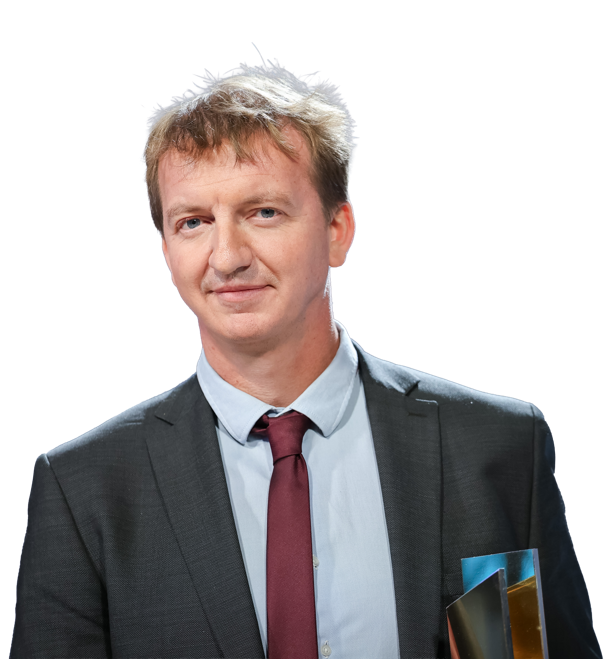
Bastien Mancini

CEO of Delair (French company that designs and manufactures professional fixed-wing drones and data solutions for industrial inspection, surveying, and defense applications)
Title: Building long range aerial sensors (Defense and industrial applications, since 2011)
▼ Abstract:
Delair was founded in 2011 by Michaël de Lagarde, Benjamin Benharrosh, Benjamin Michel, and Bastien Mancini, and quickly became a pioneer in professional UAV systems. In 2012, its DT18 became the first drone certified in France for BVLOS (Beyond Visual Line of Sight) operations, marking a major milestone for the company and the industry.
Over the years, Delair expanded through strategic acquisitions and partnerships, including Airware (and its subsidiary Redbird), Gatewing from Trimble, and collaborations with Intel and international distributors. The company also supplied drones for defense and surveillance applications, notably in Ukraine, and strengthened its presence in both civilian and military markets.
More recently, Delair has become a key actor in European defense drone programs, working with partners such as KNDS and MBDA on loitering munitions and tactical UAVs. Its systems, including the DT-46 and new hybrid platforms, are now used by French armed forces and other security actors, reflecting its shift toward high-performance dual-use technologies and autonomous systems.
Rémi Potet & Antoine Potet



Chief Technology officer of Dronisos (French company specializing in autonomous drone light shows, developing swarm technologies and large-scale aerial entertainment solutions for events worldwide)
Title: Implementing Ultra-Wideband (UWB) Technology in Robot Swarms
▼ Abstract:
This presentation examines the integration of Ultra-Wideband (UWB) technology within robot swarms, outlining its operational capabilities and the technical phases of implementation.
The keynote will address the following key areas:
-Dynamic Infrastructure: An analysis of the operational viability and implications of using moving or flying anchors instead of static reference points.
-UWB Capabilities: An overview of UWB performance specifications for multi-agent coordination.
-Positioning Techniques: An evaluation of standard UWB localization architectures, specifically RTDOA, TDOA, and TWR.
-Technical Challenges: A review of obstacles in real-world deployment, focusing on clock synchronization, multipath mitigation, time-slot allocation, and error characterization in sensor fusion.